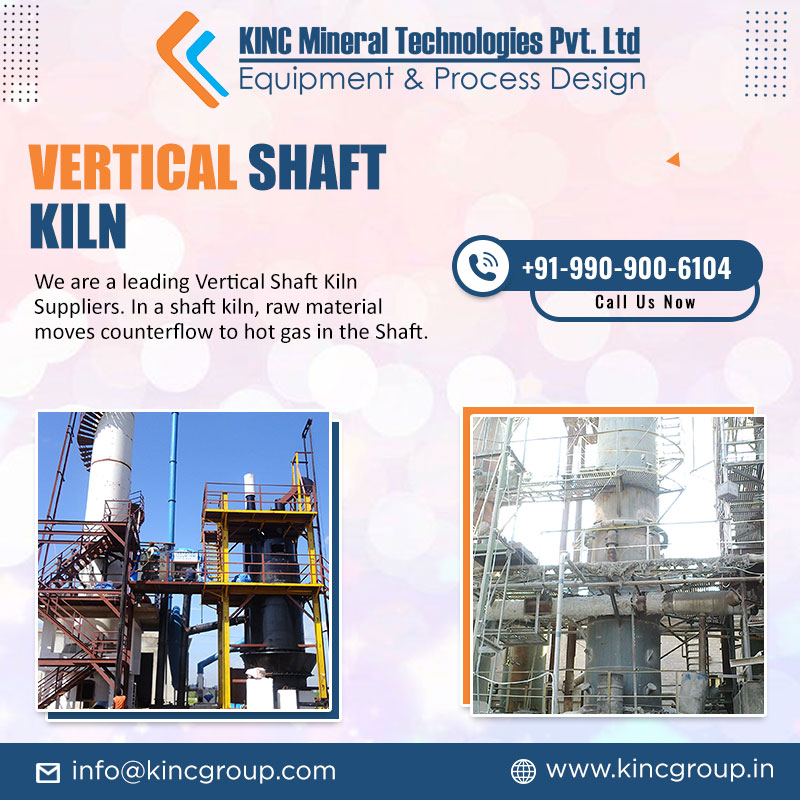
For many years, the industrial landscape has been dominated by Vertical Shaft Kilns (VSKs), a more affordable and energy-efficient option than conventional rotary kilns. In this blog, we'll examine the kilns' main characteristics and benefits, how they work and the numerous industries in which they are used.
What is the Vertical Shaft Kiln?
The Kilns is vertical chambers lined with refractories that are used to heat-process a variety of materials. VSKs have a vertical orientation instead of their horizontal cousins, saving space and making installation simple. These kilns are best suited for small to medium-sized enterprises where simplicity and effectiveness are crucial.
Working principle of Vertical Shaft Kiln
The vertical shaft kiln runs on a counter-current flow of materials and air. The kiln's top feeds the raw material, which falls naturally through the high-temperature zones. To facilitate fuel combustion, combustion air is simultaneously supplied from the bottom and moves upward. The excellent heat transfer made possible by this counter-current flow ensures controlled and uniform temperature profiles.
The Vertical Shaft Kilns' Benefits
(a) Energy Efficiency: VSKs are designed neatly, which minimises heat loss and fosters effective heat transfer. Compared to conventional rotary kilns, this design element and the counter-current flow help to reduce fuel usage.
(b) Lower capital costs: The kilns are a potential alternative for small and medium-sized firms wishing to invest in thermal processing equipment because they are more affordable to develop and install, thanks to innovative solutions provided by Vertical Shaft Kiln Manufacturers in India.
(c) Flexibility: VSKs are capable of working with a variety of substances, including bauxite, clays, and limestone. Due to their adaptability, they may be used in various sectors, including alumina, lime, and cement production.
(d) Simple Operation and Maintenance: The kilns require few people to run and require little maintenance, which reduces operational complexity.
Industrial Applications of Vertical Shaft Kiln
(a) Cement production: Kilns are frequently used to produce cement clinker. Clay and limestone are calcined as part of the process to create clinker, which is subsequently pulverised to create cement. VSKs are especially well suited for small-scale cement factories in resource-constrained areas.
(b) Lime Production: Using the kilns to produce lime is another important use for them. Quicklime, a crucial component utilised in numerous industrial processes, is created during the calcination of limestone in VSKs.
(c) Additional Uses: VSKs manufacture alumina, dolomite, and magnesite, among other materials. They are excellent for specialised industrial operations because of their versatility.
How to do maintenance of the Vertical Shaft Kiln:
- Continually look for evidence of wear, cracks, or damage in the refractory lining of the kiln. Any degradation in the refractory lining, which shields the kiln from high temperatures, should be repaired immediately to prevent heat loss and subsequent structural problems.
- Check the functionality of the combustion system, including the burners and fuel delivery lines, by monitoring it. Ensure the fuel-air combination is optimised for effective combustion and the burners are clean. Clean or replace blocked nozzles or filters regularly.
- Clean the flue gas channel to get rid of any accumulation of dust, ash or other particulates. Clogged pathways can prevent exhaust gas flow, resulting in inefficient combustion and increased emissions. Proper cooling is crucial to keep the kiln's structural integrity and avoid overheating.
- Look for wear or misalignment in the drive system, including the motors, couplings, and gears. Replace worn components as necessary and lubricate moving parts following the manufacturer's recommendations.
- If the kiln contains seals to stop air leakage, frequently watch for wear and damage. Maintaining temperature profiles and limiting energy losses depend on well-working seals.
Environment-Related Issues
The Kilns have several benefits but also emit emissions that need to be controlled. To lessen their negative environmental effects, VSKs are frequently used in emission control technologies, such as bag filters and scrubbers. In addition, using alternative fuels like biomass and materials made from waste can help make a business more sustainable.
Conclusion
The Kilns have proven themselves as practical, affordable, and adaptable instruments for thermal processing in various sectors. VSKs are anticipated to play a vital role in addressing the requirements of sustainable and eco-friendly manufacturing processes as the industrial landscape changes. These kilns represent important resources in the fight for a greener and more productive industrial future because of their vertical leap in efficiency. If you are looking for Vertical Shaft Kiln Suppliers in India, check out KINC Mineral Technologies Pvt.